EDITORS'S NOTE: Back in 2012 and again in June of 201 4 we visited the idea that space exploration beyond our solar system is going to require some physics and math presently not in the books. We predicted a long pause between the present and near future manned spacecraft and any technology that might take us beyond our own solar system. We compared the development of extra solar system manned craft with the ocean exploration transition from the long boat of oars and square sails useful for coastwise voyaging and the appearance of the first truly trans- ocean vessels, the caravels such as the Nina, Pinta, and Santa Maria. The time between these two advances in marine transportation technology was in fact thousands of years. Commercial, political, and military needs drove the technological research.
The same may ultimately turn out to be true of the evolution of extrasolar system manned craft, but we are starting to perceive signs of faster evolution in the necessarys areas of math and physics. The physics and calculus of Newton were sufficient to get us into earth orbit and put men on the moon and robotic explorers on Mars, but the path to Alpha Centauri will require the as yet to be developed "Calculus of Complexity". Professionally we first encountered the Complexity theory and the need for complexity related calculation in the maritime problem of electronic based vessel traffic control around bends in rivers. The cure took the U.S. Naval War College about two years to figure out and it was a patch work fix. You see a river is a classic "Fractal" as described by the scientific maverick Benoit B. Mandelbrot. The fractal appears to be the first area of complexity theory that has evolved beyond "fuzzy algorithms" for specific real world practical applications into a literal "geometry of fractals". But to apply the linear binary technologies of computers, radar, and telemetry to objects moving in an infinite variety of arcs up , down, and across a fractal like a river still required a convoluted, complex, application of the old calculus that came to be called "The Fuzzy Algorithm".
We came to realize that mankind's search for the calculus of complexity, the math gateway to a new physics that will open the door to extrasolar, galactic, and even intergalactic travel and communication was going to require a lot of fuzzy algorithms along the way. Since first publishing on this subject we have been drawn into the confidence of a Louisiana Company called Helios Ruehls, which is hard at work on a new fuzzy algorithm in a different maritime application. It again involves an interface between a fractal form and some older linear Newtonian based technology. Another fuzzy algorithm will be needed but Helios Ruehls' efforts reveal a stunning future where these fuzzy algorithms give way to an eventual holistic and symmetrical calculus of the complex.
Mandelbrot sometimes referred to the Geometry of the Fractal as "the measurement of roughness". Notice that only a few years ago what we now refer to as "Complexity theory" was called "Chaos Theory". The "roughness" and "chaos" is already falling away as practical needs drive searches for fuzzy algorithms as links between existing technologies and aspects of complexity theory that offer quantum leaps in performance, reliability, and speed. When the calculus of complexity emerges in its eventually to be revealed elegance and symmetry totally new vice the near future hybrid technologies will emerge that will seem like magic to 21st century minds. When we examine the history of flight including space flight in comparison with the history of marine transport we discern a speeding up of the technological and theoretical processes compared with the evolution of marine transportation. . Being allowed to peak into the secret lab work of Helios Ruehls has convinced us that the gateway to the all important Calculus of Complexity is closer than we ever thought. Perhaps the engineer who designs the first extrasolar manned craft that doesn't require the crew to commit to a life time aboard is already born.
Come with us now on a little voyage through marine and aviation history, space, and time to see why we believe the gateway to complexity is in sight and partly ajar.
WAITING ON THE CALCULUS AND THE CARAVEL
It has been over forty years since man first walked on the moon. Within thirty years of the Wright Brothers flight commercial air service for passengers and freight was readily available and growing into a major industry. Why then the apparent slowing of progress in manned exploration of space and the development of a commercial space transport industry? If we more closely examine aviation history we find little reason for concern. Moreover if we think of space as an ocean there is ample precedent and logic to what appears to be an otherwise unnecessarily long pause in developments relative to manned interplanetary flight.
First let's look at heavier than air aviation history. Here is a Chronology of some of the main events.
1. The first heavier than air flying machines to lift off the surface of the earth were kites invented by the Chinese between 400 and 300 B.C.. These and the flight of birds would be the subject of study for thousands of years before the study of aerodynamics would be formalized. The study of heavier than air flight would be studied from the flight of the Chinese kites continuously but in an uncoordinated fashion throughout this time frame. Study would be hampered by a lack of the printing press, difficult communications, in short, the inability to build a recoverable and organized body of literature on the subject that succeeding generations could build on.
One of the things that strikes us in the work of Helios Ruehls is that a precursive body of literature existed before their first attempt at an application of their targeted technologies and they have archived it, organized it, and cause the body of literature and "prior art to grow. Their information of course is proprietary but once applications are perfected and licensed, disclosure begins. No one really knows what may be going on in a similar vein in other private research efforts. What is more or less public is what is in the public university labs. The language coming out of those labs is already softer, reflecting more expectation of the emergence of a real calculus, order out of the former "Chaos", a larger symmetry encompassing a former collection of asymmetric phenomena.
2. Leonardo da Vinci scientifically studied the flight of birds and sketched various flying machines. This was the start of a recognized body of literature on flight. This would occur about 1500 A.D. or about 1800 to 1900 years after the lift off of the first kites.
3. Most heavier than air manned flight experiments after daVinci's were also man powered. In 1680 Italian mathematician Giavonni Borelli proved that human muscles were too weak to support powered flight. (At least with the technology and materials of the day. Recently there have been several human powered flights using specially geared bicycle mechanisms to drive a propeller on super light weight aircraft with very low stall speeds and giant wing span to fuselage ratios) .
4. British inventor Sir George Cayley built and flew model gliders and organized the science of aerodynamics in 1804. His work was most useful to the Wright Brothers.
5. German, Otto Lilienthal devised a system to measure lift produced by experimental wings and made the first successful manned glider flights in 1891 through 1896. His work was also most useful to the Wright Brothers.
5. In 1903 Orville and Wilbur Wright , made the first heavier than air powered flight. This would be about 400 years after da Vinci's formal studies and 99 years after the formal organization of aerodynamics into a recognizable science. sixty six years later , Neil Armstrong walked on the moon. Notice that it took over 1800 years from the first systematic and recorded observations about flight to the formal organization of the study of aerodynamics. It took only about 403 years from the formal organization of the study of aerodynamics to the first heavier than air powered flight. It took less than 70 years from the first powered flight to landing a man on the moon. Most of the progress between Kitty Hawk and the landing of the Eagle on the "Sea of Tranquility" took place before computers were of any real practical use. The computers in use today make the computational power of NASA's Apollo program computers look like cheap calculators.
The likely progress of any science or technological development in the age of the Internet is bound to be much faster than the 1800 year gap between kites and da Vinci's drawings. Still, when we first published on this subject we stated that society should not be surprised to wait 400 years or more for the kind of game changing, breakthrough technological development that the wright flyer or space shuttle represent. Today we think differently after seeing what is going with just one company operating on the cusp of Complexity Theory applications. We see the view of Complexity Theory and the search for the new calculus already taking definite directions and the search ,while not centrally directed, becoming more organized. Fuzzy algorithms are being seen as paths to questions of complexity and links between older Newtonian based technologies and newer complexity based applications. We now think that the Calculus of complexity will be well organized before the end of this century and that the twenty second century will be full of complexity theory based technology that will appear to be virtual magic to people growing up in the early decades of the 21st. Century. We may still be building space "long boats" but the inventor of the first space caravel may have already been born. The midwives of the Calculus of Complexity are readying for the birth.
 |
| Model of a Wright Flyer at the Smithsonian Air and Space Museum |
Link to a YouTube video of a filmed early Wright Brothers flight.
On the subject of going to mars:
"If we really wanted to throw money at the problem, I think we could have gone ten years ago. It's no longer a question of technology. At this point , I think we need to focus on advances in propulsion technology......
Capt. William Readdy, USNR , Commander of Shuttle Mission STS-79
p. 55 of the USNI PROCEEDINGS, February 1997.
Capt. Readdy and like minded thinkers look to a propulsion break through because of the vast distances that must be covered to carry manned spaceflight and exploration beyond the moon. At present spacecraft speeds, Mars, a close in planet, is at least nine months away. Much too far for a quick raise the flag and grab a soil sample mission. When we go, we going to stay a while and eventually start a long term base. The Wright Brothers powered flight with a technology that was not invented with flight in mind, the internal combustion engine. Without the internal combustion engine they would have simply been glider builders. Capt. Readdy has simply noted that to conquer the great distances that must be traversed to continue manned exploration, of even our own solar system, much less the galaxy beyond, a new propulsion system is needed. It is this vast distance that makes the manned exploration of space so like our exploration of the seas. We may be awaiting a development from an unrelated technology before we can move forward beyond our nearest solar system neighbors. When we compare the history of ocean exploration to space exploration not only do we get a closer parallel than a comparison with aviation history, we get a much longer time frame.
However our latest observations convince us that the transition to interstellar flight will be in a time frame much shorter than the evolution of marine transportation but slower than aviation's rapid ascent to the moon. Aviation and near space flight had full use of ancient and well proven bodies of mathematical and physical knowledge. We can't put men in installer space on the old physics and math. There are limits to the simultaneous development of Complexity theory /calculus and related technology. Our best estimate is that a mere 100 years will see incredible progress in the evolution of the calculus but rather limited applications in technology with those that do evolve being largely hybrid technologies using rather fuzzy algorithms to marry Newtonian and Complexity based technologies.
Maritime history, like aviation history, is in fact thousands of years old. But unlike aviation, developments in marine technology did not suffer as much from a lack of authoritative literature. New technologies put to sea, were seen in diverse places and quickly copied and improved upon when real improvements appeared. Here the only cultural drag was the natural conservatism of sailors. The eventual vehicle of global, ocean spanning voyages of exploration was the humble but wind and sea efficient caravel, eventually used by Columbus. It took about five thousand years for the caravel, a breakthrough technology to evolve out of the longboat. The longboat evolved through many forms from the dugout canoe to the galley and trireme. But at its' most seaworthy point of development it was grossly inadequate for an Atlantic or Pacific crossing. Such crossings had to await a new propulsion system vastly improved over oars and a square sail. The needed new system came in the form of lanteen sail and a new hull form more sea kindly than the traditional Arabian dhow. The first ship type to fill the requirements was the Portuguese caravel. While the Space shuttle was called the "caravel of space" in its heyday by some writers, we believe it is but another longboat. Compared to other man to space lift systems it was relatively cheap and efficient., but it can not go the distance like the sturdy little caravel.
We suggest that we are in a long pause in interplanetary exploration We have made the equivalent of short coastal voyages, near earth orbital missions routine. We have even made some interplanetary voyages to our nearest celestial neighbor, the moon. The knowledge gained allowed us to launch and operate unmanned probes to peer into much more distant parts of the universe and even visit other planets of our solar system. In so peering we have discerned that it is far more vast a place than ever before imagined and that planets, with atmospheres and water are probably more abundant than once thought only a few years ago. We are standing on the beach and looking out across that vast sea of outer space, with ever increasing knowledge of the far shore coming to us. But our longboats can't make the crossing. We await the development of the caravel.
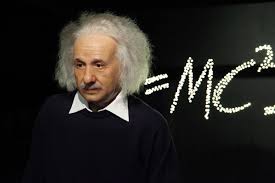
And the space "Caravel" awaits the development of a new calculus for its' would be ship wrights. Before Newton could give us the clockwork like physics that guided our voyages to the moon, he first had to invent the calculus. Physics has progressed far beyond the Newtonian view of the universe, and even that of Einstein, the real possibility of faster than light travel is hinted at, but we lack the calculus to describe it. How much money do we put in pure mathematical research as opposed to applied physics? Yet without the calculus there would be little physics. Without the advanced calculus that we need there will be no "warp drive". Newton provided us with enough theoretical physics to get us to the moon and back. But Newton and Einstein together can't take us where we need to go. Newton's calculus runs out of steam around the fuzzy edges of Einstein's universe, the realm of "complexity" where until very recently we seemed to be doing little more than collecting and describing elements of reality that have become observable but don't fit into the order described by Newton and Einstein.
 |
| SIR ISAAC NEWTON |
 |
| Albert Einstein |
 |
| Benoit B. Mandelbrot (Photo: Yale) |
. At that far edge which some call "complexity" and others "Chaos" the real possibility, indeed probability, of faster than light travel is hinted at, but we lack the calculus to describe it. Yet without the calculus , there will be no applied physics at the far and fuzzy edges of relativity we need to be exploring now. Should we be surprised then at the long pause we seem to find ourselves in? The history of ocean exploration informs us that we should expect progress in "fits and starts". The mere sixty six year span between Kitty Hawk and the Apollo flights was one of those "fits" , a period of furious and intense technological progress fueled by two hot and one "cold" global wars. It is instructive to note that Kitty Hawk came at the end of nearly a century of aeronautical study, experimentation, and publication. But now we encounter a vast distance to be crossed for which we have few tools or theories, a new start. New studies are required. We await the the calculus that will lead to the caravel.
We don't know for sure if we will have to wait fifteen, fifty, or even five hundred years. There was nearly a century between the organization of aerodynamics and powered flight. There was at least a century or two between the first appearance of the lanteen sail and the deployment of Portugal's caravels. So while we await the arrival of the calculus and then the caravel, what should be our next move? We suggest that we continue to improve the "longboat", our earth orbit operational and transport capability.
Building a greatly improved space shuttle and perhaps some cheap "pick up truck" winged space vehicles and improved capsules makes sense. Making access to near space cheaper and more routine is important, if we are to build the ultimate "longboat" that may take us to Mars, or the "caravel" for travel beyond our solar system, we must build them in space. Since we can not in the foreseeable future make a quantum leap in speed, we must improve habitability for long voyages. This requires size, genuine seagoing ship type size, and that requires construction in space from components no larger than the old space shuttle, or sky lab.
Once we have big comfortable long boats assembled there is no reason not to push off for the far but visible shore, the Moon and Mars at the least. There is a lot that is of intense interest to visit within a one year journey from the earth at present rocket speeds. Our past history as seafarers tells us that intrepid and motivated crews can and will endure voyages of discovery lasting two years or more. So the next logical steps may be simply a better shuttle, a space station big enough to serve as spaceport and ship yard, and a humble little space tug to help pull all the component parts together.
No doubt we can go to Mars now if we will foot the bill. But we intend to go to stay, which is the only way to go that makes sense, we have a fleet to build. That means the next decade or more of manned space flight will continue to be in manned earth orbit with the probable exception of a Chinese version of an updated Apollo program. If we are spending the time building the very best "longboats" we can, this is not to be lamented. Nothing else can happen until we find the calculus that let's us build the caravel. After the "caravel" voyages will still be long and dangerous. We need experience in shipboard organization, and voyage management, and space construction. Once the "caravel" is available it would be handy to have a good idea where to go, so unmanned exploratory missions should continue. If the decades ahead in space look like the decades just past since the start of the shuttle and international space station programs , there is nothing wrong with this picture if we view space as an ocean and look at our history of global exploration by sea. Even if we find the calculus in our life times we won't be able to immediately build the "caravel". Meanwhile we need to get on with space-faring in our solar system in order to have the infrastructure and personnel ready to operate the caravel when it comes.
Before the European powers launched out to accidentally discover the New World, they had already created navigation charts for as much of Europe and Africa as they could and mapped as much of Asia as possible given that they were mostly cut off from Asia by hostile Islamic forces between Europe and Asia. Such efforts are mundane, not as exciting as a Moon landing. But, we are doing what we need to do with the space station, and shuttle replacement, if we enlarge the concept of the station and build the space tug with the clear intent of building some really good longboats for use in our solar system.
Charting the globe wasn't done in a day. The New World wasn't discovered by a big government bureaucracy The New World was accidentally discovered by a Merchant Marine Officer leading a three boat flotilla on a small scale government sponsored expedition with a specific profit motive. This perhaps underscores the concerns voiced by some astronauts over the perceived slow development of commercial space transport. It will probably take more than a government only effort to both get us into the best "longboats" and eventually into the "Caravel".
The closest thing in human history to what we are now experiencing in space is known as the "European Recognizance", the pivotal point of which was the first voyage of Columbus in 1492. The "European Recognizance" didn't begin or end with Columbus, the era encompassed more than 500 years. The likelihood is that the "Human Recognizance of the Universe will follow the pattern of the European Recognizance by sea. We shouldn't be amazed or disheartened by the occasional forty year lull in electrifying events.
Indeed space is an ocean, we think, and events are proceeding about like last time. 







No comments:
Post a Comment